Four Immeasurables as Visual Feelings
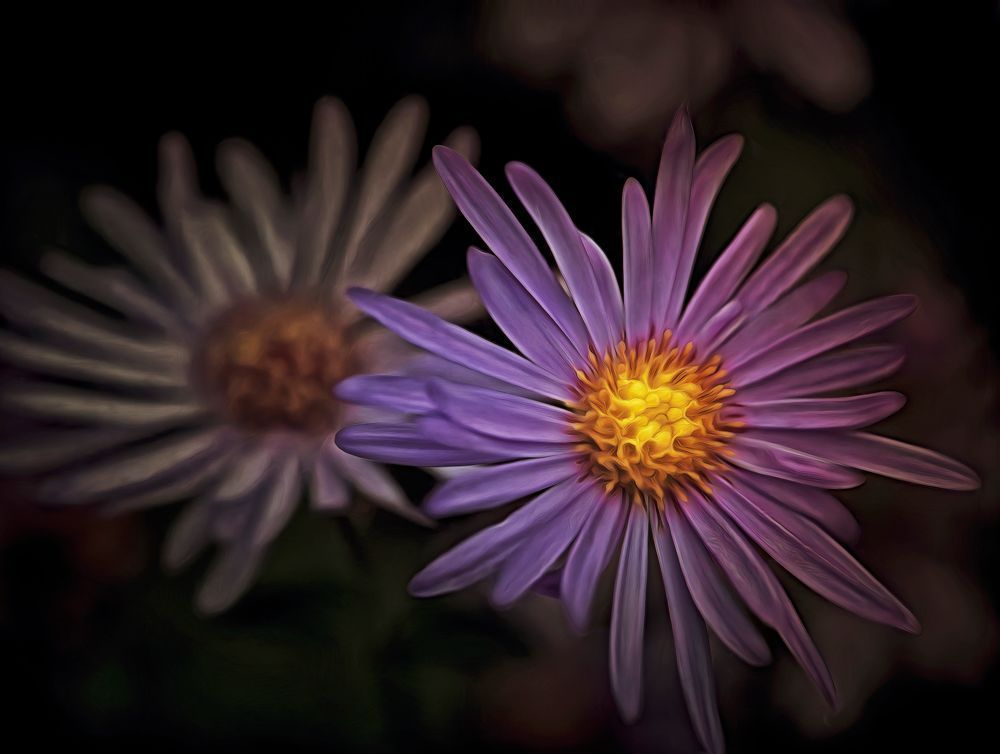
"Sole Lavanda" embodies primarily Empathetic Joy and Loving-Kindness through its radiant composition and tender color relationships. The painting channels Empathetic Joy, celebrating happiness and success without envy, through the vibrant golden-yellow center that radiates outward like a sun, sharing its warmth with all beings. This warm focal point creates what Buddhist teachings describe as "the radiance of joy," inviting viewers to rejoice in beauty itself as a shared experience. The lavender-purple petals extending from this luminous core transmit Loving-Kindness, the unconditional friendliness and wish for happiness of all beings, through their soft, embracing presence that surrounds viewers with gentle visual warmth. These two immeasurable qualities work in concert as the painting functions as a transmission vehicle for joy and art healing—the color psychology of purple promotes emotional balance, mental clarity, and spiritual connection, while the yellow center stimulates the release of serotonin, creating what researchers describe as authentic happiness. The floral subject matter itself carries embodied emotional connections that trigger neural and physiological responses associated with composedness, confidence, and tranquility, making the artwork a contemplative tool for experiencing what Buddhist tradition calls the "full-heartedness of love" and the "ease of equanimity". Through beginner's mind aesthetics—the Zen practice of approaching each moment with openness and freedom from preconception—the painting strips away complexity to reveal essential beauty, allowing viewers to experience direct emotional communion without intellectual barriers.
Large Canvas Experience
Envisioned at 53×40 inches, "Sole Lavanda" transforms from artwork into environmental presence, creating what contemporary gallerists describe as an immersive emotional experience that envelops rather than simply decorates. At this monumental scale, the lavender petals command the viewer's visual field, their subtle gradations from pink-tinged edges to deeper violet centers becoming a landscape for extended contemplation and meditative viewing. The radiant yellow center expands into a luminous beacon that fills peripheral vision, triggering what color neuropsychology research identifies as decreased amygdala activity—the brain's stress response naturally quiets in the presence of these soothing violet tones paired with energizing warm hues. An optimal viewing distance of approximately 4 to 6 feet allows the entire composition to wash over the viewer, transforming color perception into physical sensation: the lavender hues evoke tactile sensations of soft fabric and aromatic associations with calming scents, while the golden center produces warmth sensations and auditory associations with gentle humming or resonant tones. The painting's substantial physical presence creates what art psychology researchers call "emotional contagion"—viewers unconsciously absorb the artwork's mood of serenity, creativity, and spiritual openness, experiencing the purple spectrum as a visual embrace that encourages inward reflection while the yellow core maintains joyful connection to life's vitality. Extended contemplation before this large-scale canvas produces progressive layers of experience: initial visual impact gives way to bodily sensations of calm breathing and relaxed shoulders, followed by emotional responses ranging from peaceful contentment to inspired wonder, culminating in what Buddhist practitioners recognize as "boundless mind"—a state where the boundary between observer and artwork dissolves into shared aesthetic experience.