Four Immeasurables as Visual Feelings
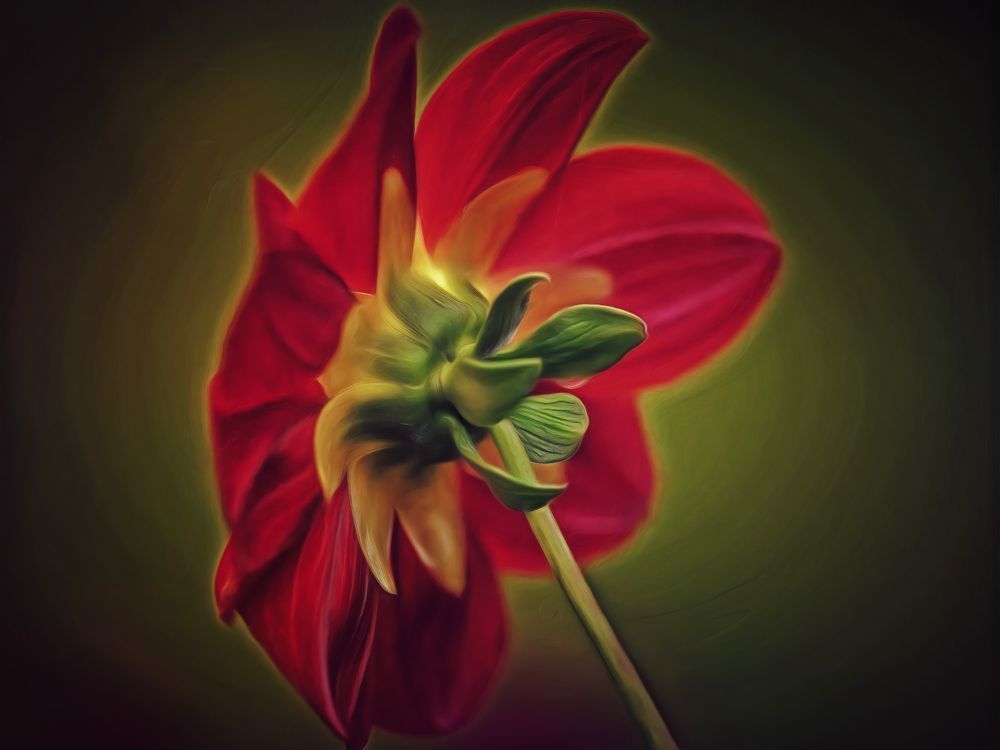
This monumental floral painting radiates the primary qualities of Empathetic Joy and Loving-Kindness through its luminous presentation of a red tulip captured at the precise moment of unfolding transformation. The backward-facing perspective—viewing the flower from behind as it opens toward unseen light—creates an intimate visual metaphor for reaching outward with unconditional friendliness while simultaneously inviting viewers into a shared experience of wonder and emotional resonance. The painting functions as a transmission vehicle for joy through its chromatic intensity: the passionate reds and warm oranges of the petals evoke feelings of vitality, love, and the urgent celebration of life, while the luminous yellow-green glow surrounding the flower's center acts as a visual beacon of awakening consciousness. Dr. Mehta's physician-artist perspective, informed by two decades of practicing medicine with these boundless principles, manifests in the painting's dual nature—the delicate vulnerability of translucent petals balanced against the commanding strength of the tulip's architectural form—creating what researchers describe as an affective affordance that allows viewers to experience art therapy and emotional processing without verbal articulation.
Large Canvas Experience
When encountered at its intended 53×40-inch dimensions, "Reach For Me" transforms from mere representation into what contemporary art scholars term an immersive experience, where scale magnifies emotional intensity and creates a commanding presence. At this monumental scale, the painting's color perception shifts dramatically: viewers standing three to four feet away report that the radiant reds appear to pulse with warmth and energy, creating what color psychology research identifies as physiological responses including elevated heart rate and heightened alertness, while the glowing aureole of yellow-green light surrounding the flower's reproductive center generates an almost tactile sensation of radiance that extends beyond the canvas boundary. The large-scale format commands the viewer's entire visual field, eliminating peripheral distractions and facilitating what beginner's mind practice describes as direct, unmediated experience of the present moment—the painting's atmospheric depth, with its graduated progression from sharp foreground clarity to soft-focus background, creates spatial illusion that invites extended contemplation as the eye travels repeatedly from the architectural precision of the petal edges to the mysterious shadows nestled within the flower's interior chambers. Viewers may report kinesthetic associations as the upward-reaching gesture of the flower evokes bodily sensations of expansion, aspiration, and openheartedness, while the painting's chiaroscuro modeling—the interplay of illuminated surfaces against velvety shadows—generates what immersive art research describes as emotional cognition where positive feelings expand perceived space and create environments of psychological elevation and awe.