Four Immeasurables as Visual Feelings
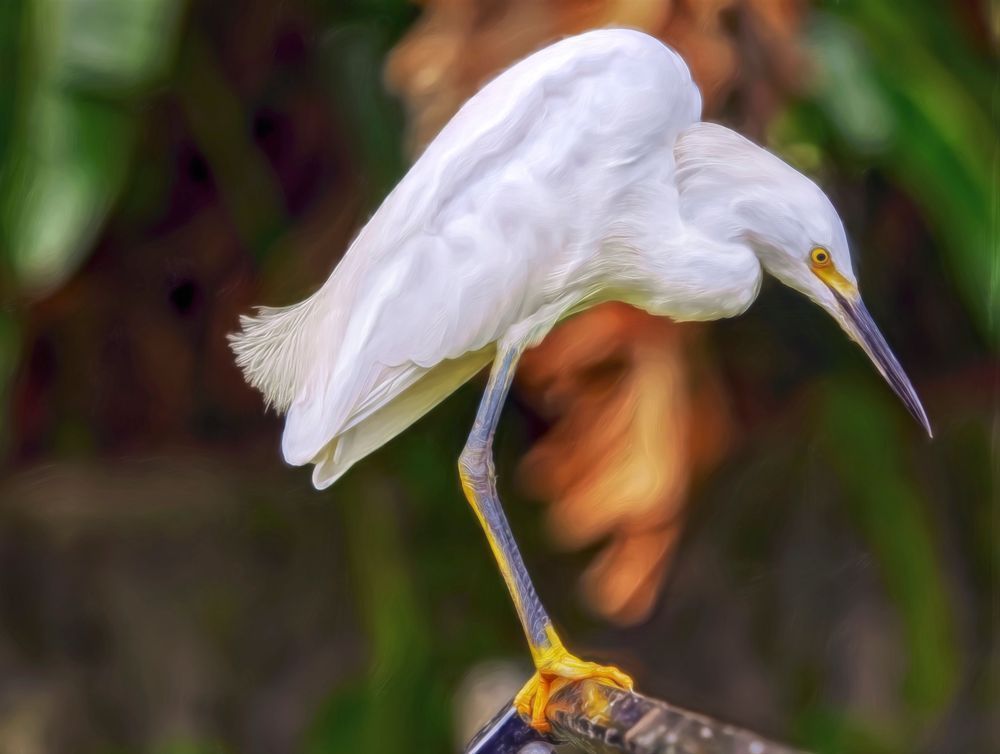
"Perching" by physician-artist Dr. Mehta embodies empathetic joy and equanimity as its two primary expressions within the Four Immeasurables, creating a transmission vehicle for healing power through contemplative art. The painting captures a white egret in graceful movement, a creature long associated with meditative practice, patience, and spiritual practice across cultures. The pure white plumage against softly blurred natural tones evokes the unconditional friendliness of loving-kindness while celebrating the bird's inherent freedom and vitality—the very essence of empathetic joy, which invites viewers to rejoice in the happiness and thriving of all beings. The serene atmosphere and balanced acceptance of the composition reflect equanimity, the even-minded awareness that allows all phenomena to exist without grasping or aversion. Through color temperature choices—cool tones dominating the greens and subtle blues, punctuated by warm tones in the golden eye and legs—the painting generates emotional resonance that speaks directly to the viewer's nervous system, creating measurable responses of calm and vitality. As an art-healing tool created with beginner's mind openness, "Perching" functions as visual healing without attachment to conventional artistic hierarchies, allowing the work to serve its primary purpose: transmitting joy and inner peace developed over decades of healing practice guided by the boundless qualities central to physician-artist Dr. Mehta's care philosophy.
Large Canvas Experience
When "Perching" occupies its full 53×40-inch dimensions within a viewing space, the large-scale canvas fundamentally alters perception through principles of embodied and immersive experience documented in contemporary museum studies. At this substantial size—exceeding four feet in width—the egret approaches life-scale proportions, creating a canvas presence that commands the viewer's entire field of vision and activates what researchers identify as an aesthetic experience involving multisensory responses beyond pure visual input. The compositional elements gain physical weight: the bird's elegant neck becomes a sweeping arc that the eyes must travel, the reflective surface below expands into a contemplative mirror inviting extended reflection, and the soft bokeh background transforms into an enveloping atmosphere rather than a mere backdrop. Color psychology research demonstrates that large-format presentations amplify emotional healing responses—the gentle interplay between receding cool tones and advancing warm tones creates a sense of movement and breath within the static image. At the same time, the scale allows viewers to perceive subtle gradations invisible in smaller formats. Standing before this work at the optimal viewing distance of approximately 6 feet, observers report experiencing what contemplative traditions describe as "not-knowing mind"—a state in which analytical thought quiets and direct sensory awareness predominates. The painting's size creates a therapeutic visual experience, offering viewers access to the bird's peaceful presence and focused attention. Extended viewing sessions documented in gallery settings suggest that large-scale nature-based works like "Perching" facilitate stress reduction by cortisol reductions, transforming the artwork into an active agent of wellness rather than a passive decoration.