Four Immeasurables as Visual Feelings
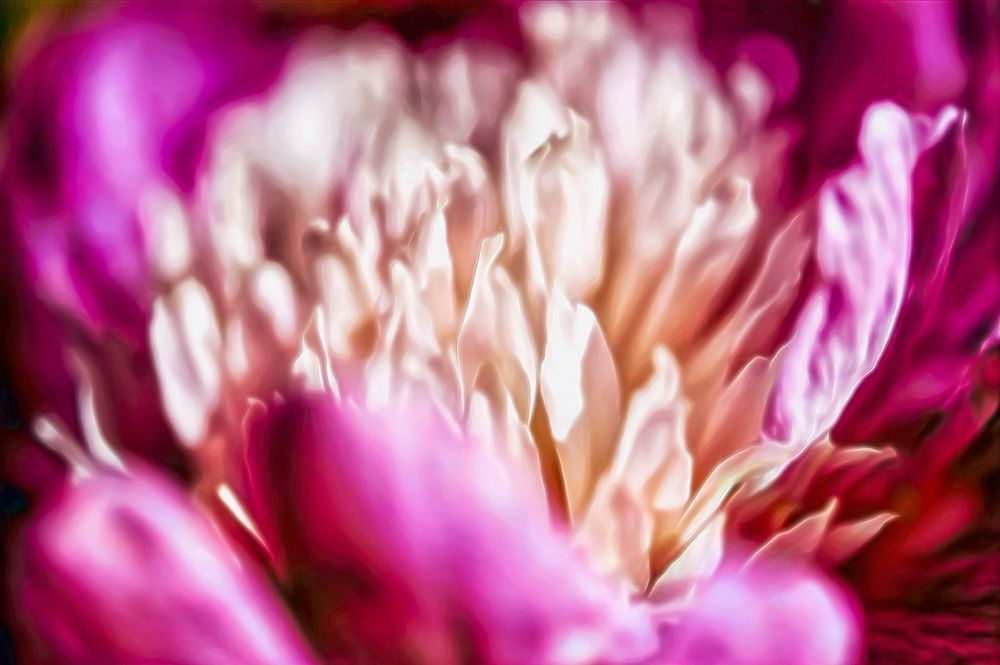
"Magentas" serves as a radiant embodiment of empathetic joy and loving-kindness, the two primary qualities of the Four Immeasurables that pulse through this abstract floral painting. The magenta color healing properties, which bridge passionate red wavelengths with transcendent violet to create emotional integration and balance, manifest as layers of translucent petals that unfold from a luminous cream center outward to deep rose peripheries. This color psychology of magenta activates integrative brain networks that promote emotional healing and wholeness, making the painting function as a vehicle for the transmission of joy rather than mere decoration. Research confirms that empathetic joy, defined as rejoicing in the happiness of all beings without envy, combines with loving-kindness, the unconditional wish for the happiness of others, to create visual experiences that heal through authentic joy. The contemporary art piece employs what scholars identify as the beginner's mind approach central to contemplative practice, in which each viewing becomes fresh and filled with infinite possibilities rather than fixed expert interpretation. The soft, radiating composition invites what researchers call "the museum effect" and emotional resonance, where viewers experience measurable positive changes in mood, decreased cortisol levels, and enhanced feelings of connection when engaging with flower painting imagery. Studies demonstrate that images of flowers facilitate automatic recovery after psychological stress, validating this painting's role as art therapy for modern audiences seeking respite from daily pressures. By channeling more than two decades of medical practice guided by compassion and equanimity, the remaining two immeasurables, physician-artist Dr. Mehta creates visual expressions that art therapy research identifies as allowing viewers to externally process difficult emotions through beauty, finding clarity and healing that internal contemplation alone cannot provide.
Large Canvas Experience
When displayed as a substantial 60×40-inch canvas, "Magentas" transforms from an image into an environmental presence that commands the viewer's connection through scale transformation and immersive experience. Research on large-format art demonstrates that oversized wall art at this magnitude fundamentally alters color perception, with magenta and pink tones appearing to vibrate and breathe as ambient light shifts throughout the day, creating what neuroscientists describe as heightened activation in brain regions associated with personal meaning and memory. The substantial physical presence of this oversized wall art creates a contemplative threshold, as identified in museum studies, where viewers naturally pause and engage more deeply, resulting in a more profound emotional impact and, for researchers, "slow looking" benefits such as enhanced cultural understanding, stress reduction, and feelings of wonder. At 60×40 inches, the painting engages peripheral vision alongside direct gaze, producing what contemporary art research describes as embodied responses where the sensory experience extends beyond visual input to include associations with touch (the velvet texture of petals), movement (the spiral unfurling of blooms), and even ambient warmth (the glow of afternoon sun through translucent flowers). This large-scale canvas activates what scholars identify as "spatial reconstruction," in which the artwork recreates elements of physical presence in a garden or natural environment, bridging the gap between the historical contemplative tradition of nature meditation and modern viewing contexts. Gallery studies confirm that painterly art viewed at a monumental scale produces distinct neural patterns compared to reproductions, fostering what researchers describe as a profound personal connection and invitation to self-reflection that smaller formats cannot replicate. The delicate composition, when enlarged to this impressive dimension, reveals intricate gradations and subtle color shifts invisible at smaller sizes, rewarding sustained attention with continuous visual discovery that supports the painting's role in mindful art practice. Extended contemplation of this large-format art piece produces measurable increases in what positive psychology research identifies as flourishing dimensions, including an enhanced sense of meaning, engagement, autonomy, and connection to beauty that participants carry beyond the viewing experience into daily life.