Four Immeasurables as Visual Feelings
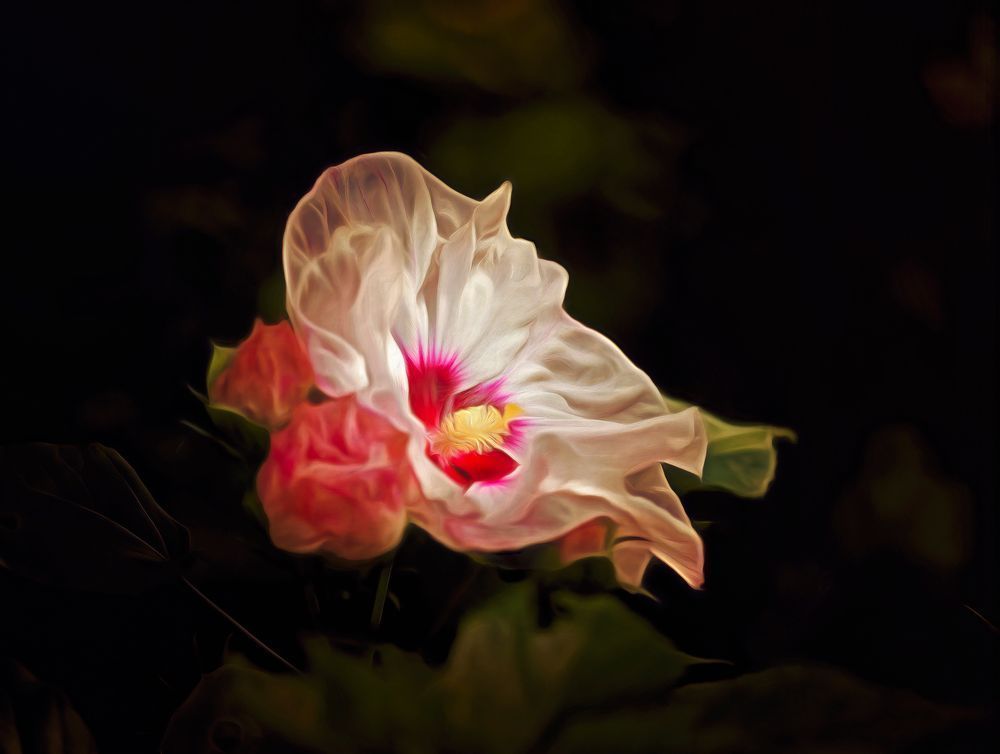
Empathetic Joy and Loving-Kindness emerge as the two primary boundless qualities radiating from this luminous flower portrait. The painting serves as a vehicle for authentic happiness, celebrating botanical beauty and the transient miracle of a single bloom. The white petals symbolize purity and spiritual awakening, embodying the loving-kindness that wishes happiness for all beings. At the same time, the vibrant magenta-red center pulses with empathetic joy, inviting viewers to rejoice in nature's exuberant gift without grasping or ownership. This chiaroscuro composition—Renaissance-inspired light emerging dramatically from darkness—creates emotional positioning that mirrors the Four Immeasurables practice itself: from shadow into illumination, from suffering toward celebration. The artist's beginner's mind approach allows fresh seeing, approaching each petal as though witnessing botanical wonder for the first time, free from expert habits that might diminish direct experience. The delicate rendering of translucent petals and the radiant stamen invite contemplation of fleeting beauty, teaching non-attachment through celebration rather than melancholy. Contemporary research confirms that viewing art depicting nature reduces stress, activating reward pathways while promoting emotional regulation and mindfulness. As a healing modality, this painting operates through what scholars call "positive distraction," where botanical imagery creates safe spaces for viewers to access calm, connection, and insight into their own human experience. Physician-artist Dr. Mehta's two decades practicing medicine with these Four Immeasurables infuse every brushstroke with intentional emotional medicine, transforming what could be merely decorative florals into contemplative transmission art that genuinely facilitates joy and wellness.
Large Canvas Experience
Displayed at 53×40 inches, this substantial botanical portrait transforms from an observed image into an immersive environment that envelops viewers in a visceral encounter with scale, presence, and emotional intensity. Research demonstrates that large-scale artworks create fundamentally different psychological effects than smaller pieces—commanding attention, exuding grandeur, and forcing viewers to confront emotional weight through sheer physical dominance. At this monumental scale, the white hibiscus petals become architectural elements that visitors can virtually step into. At the same time, the glowing magenta-red center pulses with palpable life-force energy throughout the gallery. Color perception intensifies dramatically at this substantial scale as viewers stand close enough to see individual brushwork textures, observe how warm magentas vibrate against cool whites, and notice subtle pink undertones that suggest dawn light filtering through living tissue. The commanding physical presence creates what museum studies call "extended contemplation time"—viewers naturally pause longer before significant works, allowing deeper emotional responses to unfold as the painting reveals layered meanings through sustained attention. Movement sensation emerges as eyes travel from the luminous central stamen outward along unfurling petals into surrounding darkness, creating a rhythmic flow that mirrors breathing or heartbeat. The chiaroscuro contrast—brilliant whites against enveloping shadows—gains theatrical power at monumental scale, evoking Renaissance masters while maintaining contemporary freshness through the physician-artist's direct, unmediated botanical observation. Touch becomes implicated through visual suggestion; at 53×40 inches, the velvety petal texture and paper-thin translucence invite phantom tactile response, while the smooth waxy center seems to offer coolness against imagined fingertips. Extended viewing induces meditative absorption, where time perception shifts, breathing deepens, and viewers report feeling transported into nature despite the gallery's confines—the very definition of art functioning as a healing sanctuary. Sound associations emerge unbidden: the silence of bloom, perhaps gentle rustling, maybe distant bees hovering near that golden stamen center, creating multisensory richness from purely visual stimulus. Movement through space around this large canvas reveals changing relationships—step back for full compositional impact, move closer for intimate petal detail, shift sideways to observe how light modeling creates three-dimensional form from two-dimensional surface. This scale transforms casual viewing into an embodied experience, where the painting doesn't merely hang on the wall but creates its own gravitational field, inviting viewers into dialogue about beauty, impermanence, vitality, and the physician-artist's healing intention made visible through authentic joy.