Four Immeasurables as Visual Feelings
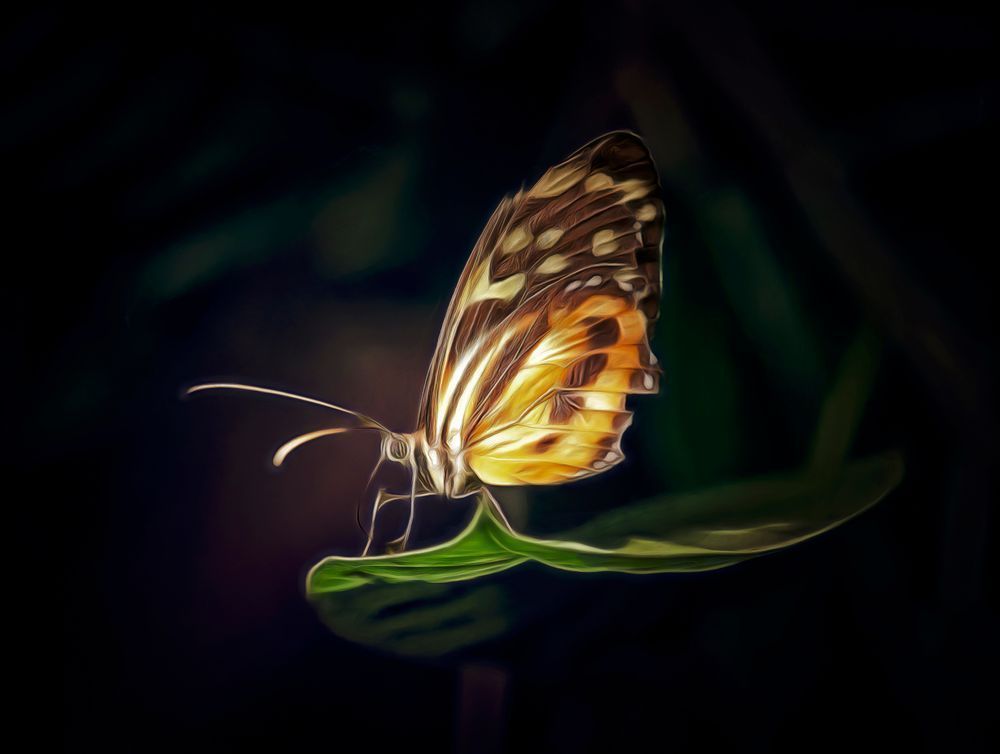
"Farfalla di Malachite" functions as a transmission vehicle for empathetic joy and loving-kindness, the two primary boundless principles embodied through its luminous composition. The painting's radiant golden-amber butterfly, rendered with Renaissance-inspired glazing techniques that create an inner glow, manifests empathetic joy through its celebration of transformation and the beauty of existence itself. This metamorphosis symbolism—the butterfly's journey from darkness to winged radiance—embodies the understanding that change need not be traumatic but can unfold with grace and lightness. The warm color palette of honey-gold and amber hues activates neurological pathways associated with happiness, optimism, and emotional well-being, creating what color theorists describe as harmonious emotional effects that spark joy without overwhelming the viewer. Loving-kindness radiates through the painting's tender attention to natural beauty, the chiaroscuro technique that bathes the subject in compassionate light while honoring the surrounding darkness, and the artist's mindful execution rooted in decades of healing practice guided by the Four Immeasurables. The malachite butterfly—a symbol of prosperity, good fortune, and powerful transformation across cultures—becomes a visual embodiment of the physician-artist's intention to transmit these immeasurable qualities through beginner's mind creative expression. Studies confirm that viewing such emotionally resonant artwork activates self-reflection and memory. At the same time, the painting's warm golden luminosity engages therapeutic pathways that reduce stress, promote inner peace, and foster emotional healing. As a transmission vehicle for joy, this work demonstrates what researchers describe as art's capacity to function as visual healing for both creator and viewer, externalizing complex emotions while cultivating compassionate awareness.
Large Canvas Experience
Displayed at 53×40 inches, "Farfalla di Malachite" commands monumentality that transforms viewing into an immersive encounter with contemplative presence. At this substantial scale, the painting's glazed amber and golden-orange hues—achieved through transparent layering that allows light to penetrate and reflect back through the paint—create what Renaissance masters understood as optical mixing, producing a shine-through effect impossible with opaque application alone. The viewer experiences color not as surface decoration but as luminous atmosphere, with the warm palette physiologically accelerating heart rate while simultaneously promoting contemplation and spiritual reflection. Museum studies demonstrate that large-scale works create spatial disorientation in which conventional boundaries dissolve, and this painting's dramatic chiaroscuro—the interplay of illuminated butterfly wings against deep shadow—guides the eye while adding psychological depth, making the flat surface feel alive. Extended contemplation before such monumental works activates what art therapy research identifies as the mind-body connection, in which viewers report decreased anxiety, enhanced emotional awareness, and access to memories and feelings beyond conscious articulation. The painting's warm golden glow at this scale evokes the color psychology of comfort, security, and happiness, akin to sunlight's effect on well-being. At the same time, the metamorphic subject matter creates associations between visual form and movement—the butterfly's dance-like flight translating into viewers' own sense of lightness and freedom from heaviness. The immersive quality emerges from what researchers call color-to-emotion translation, where the amber-gold harmonies trigger responses of warmth, enthusiasm, and creative clarity without overwhelming intensity, creating an all-encompassing spatial experience that redefines the relationship between artwork and viewer as an environment to be entered rather than an object to be observed. This substantial canvas becomes what contemporary museum education identifies as a site for contemplative practice, where the combination of scale, luminosity, and symbolic content invites viewers into meditative looking that fosters spiritual engagement and emotional renewal.