Four Immeasurables as Visual Feelings
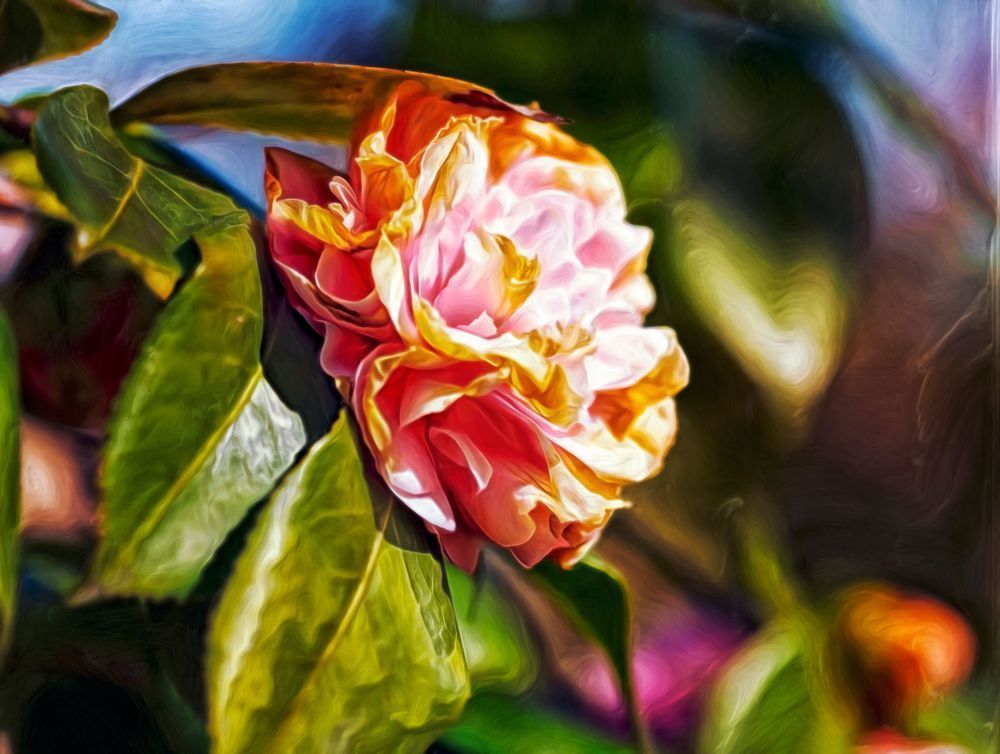
"Catching Fire" embodies Empathetic Joy and Loving-Kindness as its two primary qualities, manifesting through a luminous floral composition that radiates authentic happiness and connection. The painting conveys joy without envy, celebrating the flower's natural beauty as its petals unfurl in brilliant shades of coral, pink, and amber against a backdrop of supportive green foliage. This visual celebration of bloom embodies flourishing without possessiveness or comparison. The warm color palette—rich oranges blending into soft pinks and radiant yellows—evokes unconditional friendliness and well-being, inviting audiences into a compassionate visual experience that eliminates barriers between observer and observed. Through contemplative art practice, the physician-artist creates a transmission vehicle in which brushwork and color convey healing wisdom gained over two decades of medical practice guided by these qualities. The flower's progression from tightly wound petals to expansive openness mirrors the spiritual transformation symbolized by fire—purification through change, illumination through acceptance, and renewal through embracing impermanence. Academic research confirms that color-emotion associations in art therapy facilitate emotional healing and that paintings embodying positive emotional states can reduce symptoms of anxiety while promoting psychological well-being. The Renaissance-inspired beginner's mind approach allows the artist to render familiar botanical forms with fresh perception and openness, qualities central to the Zen concept of shoshin, where mastery paradoxically maintains receptivity to each moment's teaching.
Large Canvas Experience
Displayed at 53×40 inches, "Catching Fire" transforms from an image into an immersive environment, commanding a physical presence that invites viewers to engage in full-body contemplation. The substantial scale magnifies the flower's luminous properties, allowing warm hues to envelop the viewer in an experiential field of color that research indicates can shift emotional states through extended viewing. At this dimension, the painting creates what scholars describe as a transformative aesthetic encounter—audiences no longer look at art but inhabit a visual sanctuary where the boundaries between self and painting soften. The monumental format intensifies color perception: coral petals appear to radiate warmth like captured sunlight. At the same time, the interplay of pink and gold creates visual rhythms that evoke gentle movement, as if witnessing the flower's breathing. Viewers standing before this large-scale work report feelings that extend beyond visual appreciation into somatic response—the painting's warm palette and organic forms trigger associations with safety, growth, and natural cycles that resonate in the body. The depth and dimensionality achieved through layered brushwork become apparent only at this scale, inviting prolonged engagement where details reveal themselves gradually, rewarding mindful attention with continuous discovery. Gallery research confirms that oversized artworks function as experiential phenomena rather than mere decoration, creating moments of awe that interrupt habitual perception and invite viewers into contemplative states where healing can occur. The painting's substantial presence in a living space establishes it as an emotional anchor—a daily reminder of beauty's capacity to transform suffering into appreciation, embodying physician-artist Dr. Mehta's intention that art serve as a therapeutic intervention through sustained visual engagement.